

Common Shooting Myths - Inside MDT
These days, it isn’t necessary to do much eavesdropping on the internet to hear some wild ideas expressed about shooting and guns themselves. I’ve listened to my share of myths expounded as unquestionable facts, with the following being some of my favorites.
30MM SCOPE TUBES ARE BRIGHTER THAN 1-INCH TUBES
This is a common misconception because, on the surface, it seems reasonable. After all, a big garden hose lets more water flow through it compared to a small diameter tube. So, it should be true of light as well. It could be true, but in practice, there is an internal tube inside all rifle scopes called an erector tube that isn’t visible. This tube is normally the same diameter in a 1-inch scope as in a 30mm optic. Since that’s what light travels through, there isn’t a difference in the amount of light making the trip. That erector tube gets shifted around inside the external tube when the shooter makes windage and elevation adjustments. As a result, a 30mm main tube has more adjustment, both vertically and horizontally. And it’s also stronger, a lot stronger. But if everything else is equal, it’s not brighter.
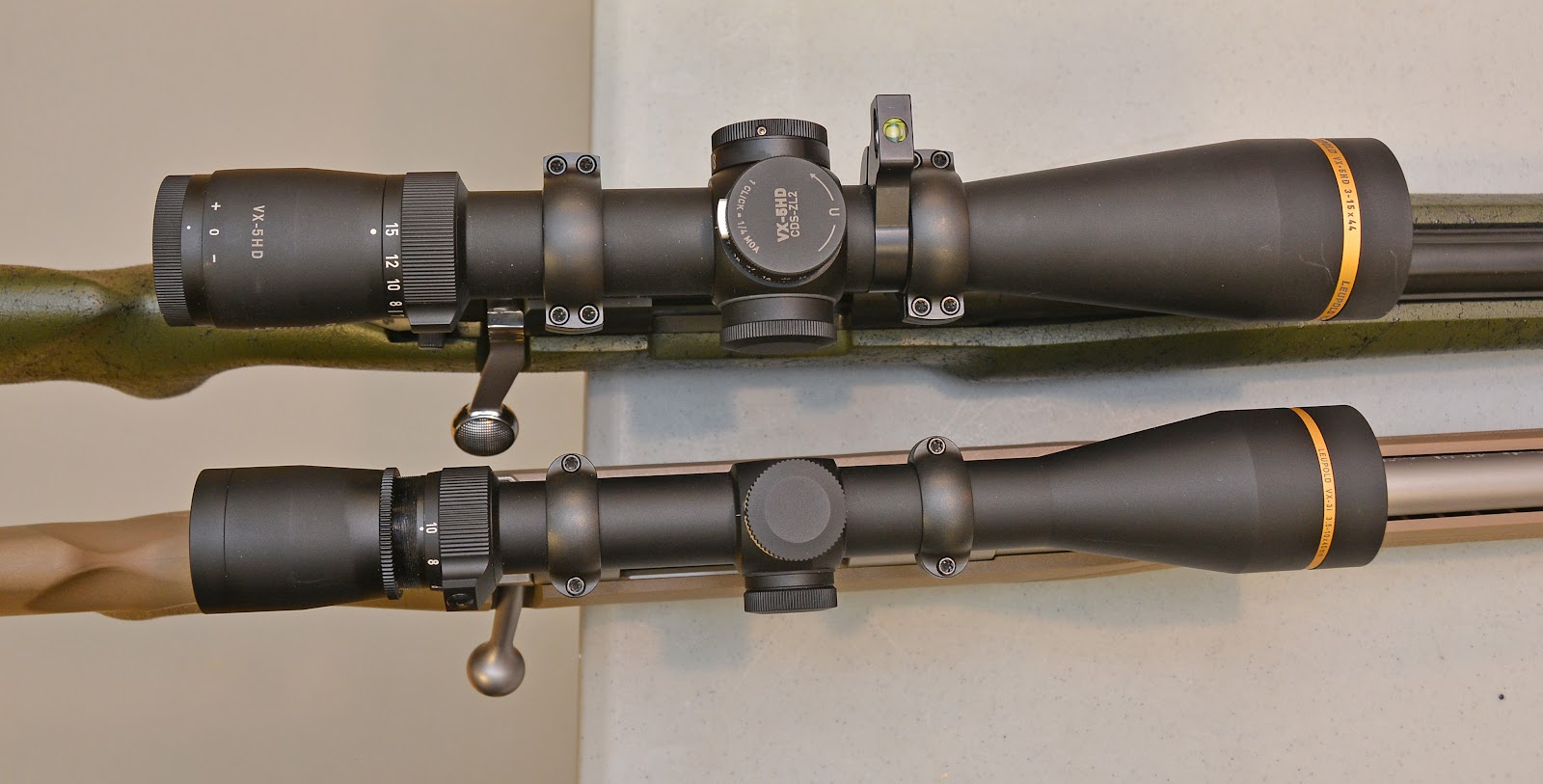
Everything else being equal, a scope with a 30mm tube (top) is no brighter than one with a 1-inch tube.
BOAT TAIL BULLETS SIGNIFICANTLY FLATTEN TRAJECTORY
They don’t. But before you reach for your ballistic calculator to prove me wrong, let me add a qualifier. They don’t significantly flatten trajectory over typical hunting distances. Let’s look at two examples. Hornady makes 150-grain .30 caliber bullets that are identical except for the base. The flat base bullet has a G1 ballistic coefficient (BC) of .338, and the boattail is .349. Sighted at 200 yards and with a 3000-fps velocity, the boat tail bullet will drop 44.0 inches at 500 yards, while the flat base bullet will drop 44.8 inches. That’s less than an inch of difference. As for wind drift, under similar conditions, with a 10 mph wind, the boat tail bullet will drift about one inch less than the flat base.
Hornady also makes a couple of 139-grain 7mm bullets that are identical except for a boattail. The BC difference is greater here, with the boattail having a BC of .453 while the flat base is .392. That .061 difference in BC gives the boattail a 2.6-inch edge at 500 yards when velocity is 3000 fps. The boattail’s advantage with wind is also evident, with about three inches less drift in a 10 mph wind. To take advantage of the boattail, you’d need a rifle capable of consistent ½ MOA accuracy, perfect atmospheric conditions, and a benchrest to shoot from.
So, inside of 500 yards (typical hunting distance), there’s not a significant advantage to boat tail bullets. Even by changing bullet weight and design to get BCs over .6, you’ll likely only be able to shave off another inch or so of bullet drop. It’s out past 500 yards that boat tail bullets start to make a difference. But don’t let that stop you from using them for up-close shooting; I do. Just keep your expectations realistic.
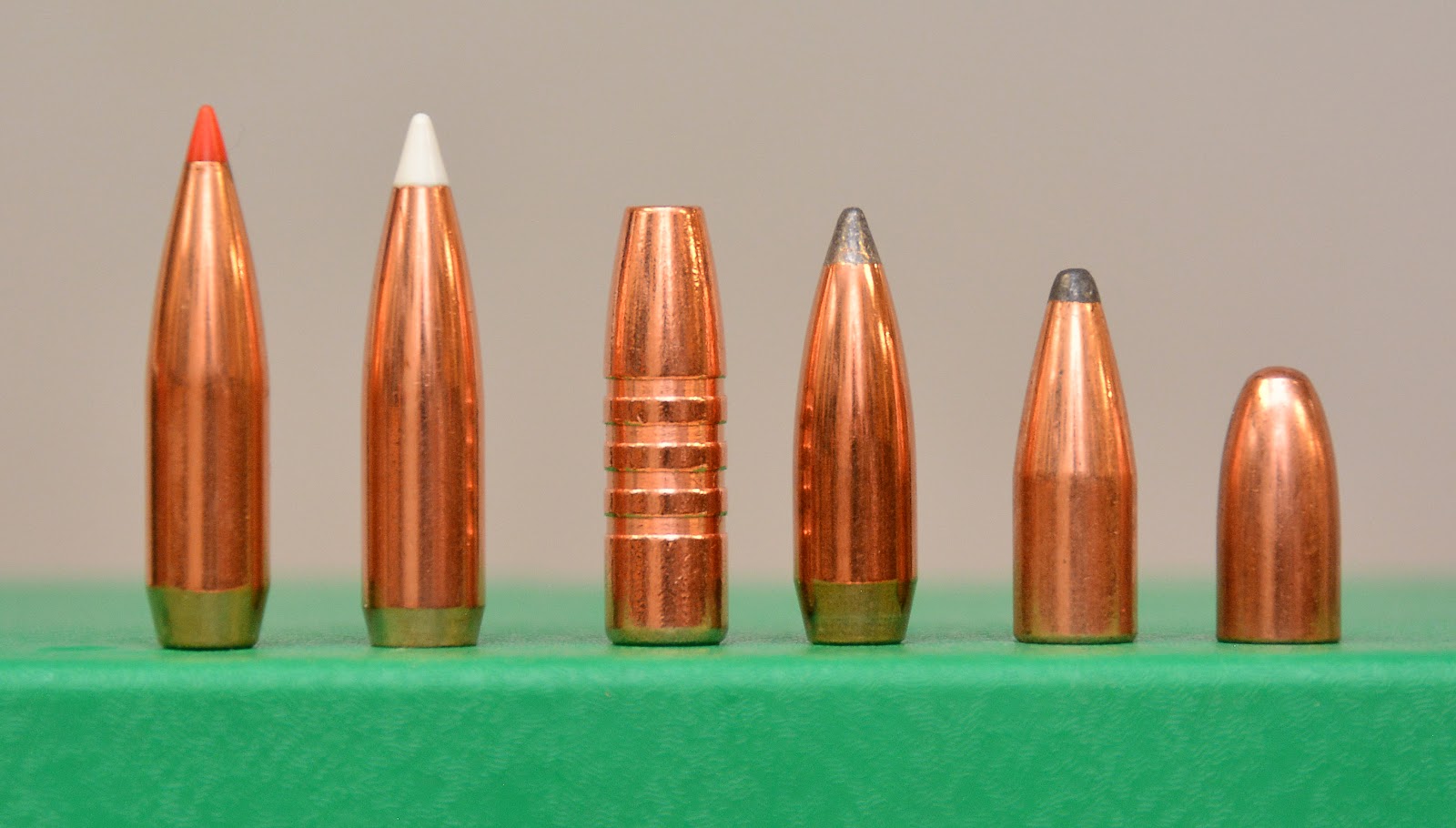
The presence of a boattail does little to flatten a bullet’s trajectory at normal hunting distances.
IMAGE QUALITY IS THE MOST IMPORTANT THING IN A RIFLESCOPE
This idea isn’t just wrong; it’s spectacularly wrong. But it’s something a lot of shooters obsess over. Sure, image quality is nice to have, and I love scopes with bright, clear, sharp images, but they don’t even rank in the top three characteristics you should look for in a scope. The single most important feature of any riflescope is its ability to hold zero. If a scope won’t hold its zero reliably due to recoil and rough handling, the best image quality in the world is useless.
Likewise, if the scope is set up for dialing long shots, its ability to track reliably is far more important than image quality. Riflescope money should be spent on things like holding zero, tracking, and overall durability, with image quality falling behind. Fortunately, durability and image quality are not mutually exclusive. You can get both by spending enough money. However, when it comes to optical quality, the best place to spend that money is on observation optics, such as binoculars or spotting scopes. That’s where image quality counts. If you want to obsess about image quality, do it on those items.

A scope’s image quality is not its most important feature.
LONG BARRELS ARE MORE ACCURATE
This one can be true, but only if you’re using iron sights or shooting groups at the transonic range. Besides internal quality, the thing that makes a barrel accurate is stiffness. And since short barrels tend to be stiffer than long barrels, they also tend to be more accurate. I’m not saying long barrels are inaccurate; they aren’t. There is no shortage of long barrels, which are extremely accurate. It’s just not the length that makes them that way. Long barrels will increase velocity and extend your transonic range, which can increase accuracy at long distances.
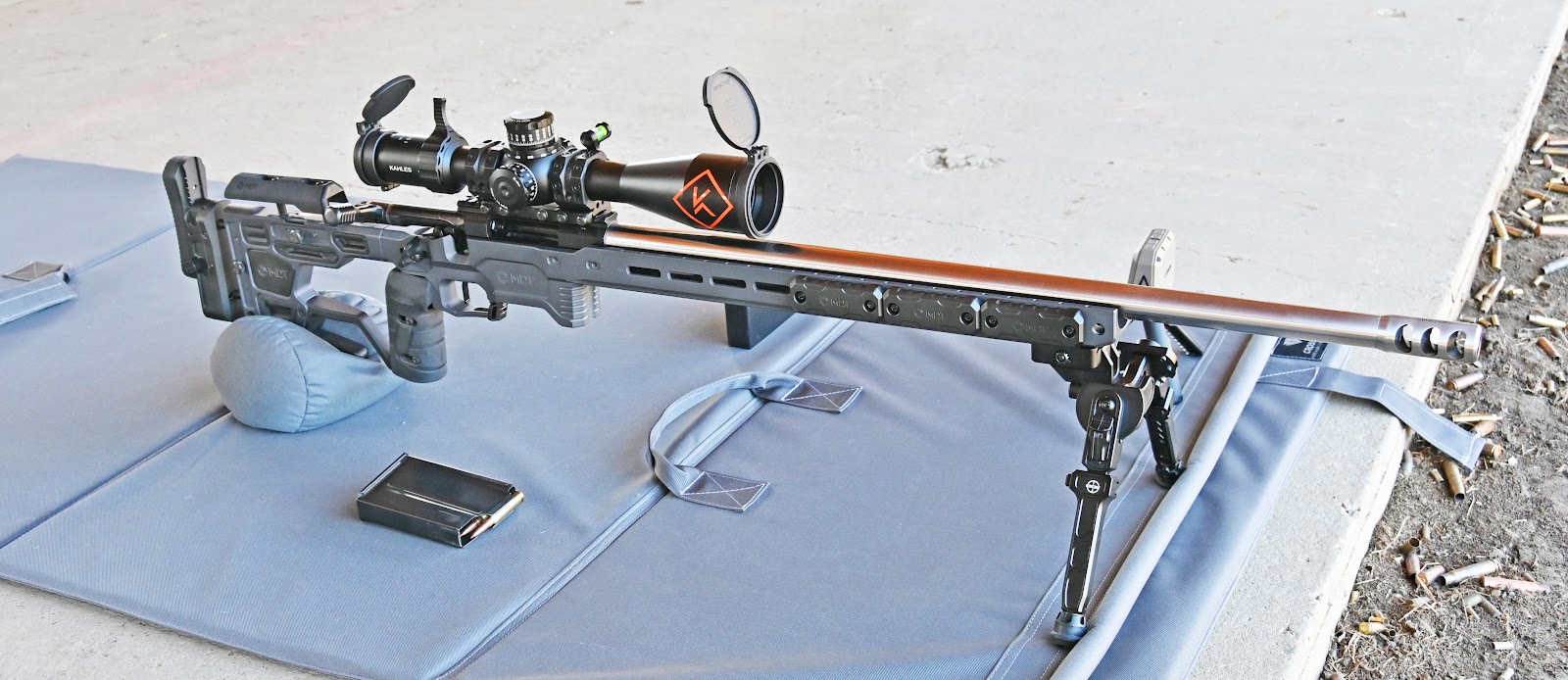
Long barrels have advantages, but better inherent accuracy isn’t one of them.
From Our YouTube Channel!
ARTICLES FROM AL VOTH
- Rimfire Season
- Optics: Parallax and Optical Center
- Optics: Understanding the Optical Triangle
- The Ethical Shot
- Avoid Common Gun Mistakes
- Hunting Drills for Success
- Pursuing Precision
- Rimfire Season
ABOUT THE AUTHOR
Al Voth calls himself a "student of the gun." Retired from a 35-year career in law enforcement, including nine years on an Emergency Response Team, he now works as an editor, freelance writer, and photographer, in addition to keeping active as a consultant in the field he most recently left behind—forensic firearm examination. He is a court-qualified expert in that forensic discipline, having worked in that capacity in three countries. These days, when he's not working, you'll likely find him hunting varmints and predators (the 4-legged variety).
MDT Renegade Ultra-Light Shooting Bag Wins On Target Magazine's Editor's Choice Award
#MDTSTORY - Bull Down, on the "P" Road!
Related Posts

5 Benefits of Suppressors Beyond Sound Reduction on Precision Rifles

Guns & Ammo: Savage 110 Ultralite Elite

Using a Sling in Modern Marksmanship

The Four Cornerstones of Marksmanship

Building a Classic Rifle with the MDT TIMBR CORE

Federal’s Peak Alloy Ammunition: Revolutionary Advancement or Reason for Caution?

Impact Shooting: MDT Field Stock in a Precision Rifle Match
