

Three Biggest Dangers During a Hunt - Inside MDT
Whether you're looking at getting into the sport of hunting to ethically take clean meat and fill your freezer with quality protein, or you're an advanced hunter with a game room full of trophies, let's review the three most dangerous situations we can encounter while hunting. It is no surprise that hunting can be dangerous; anything that involves a firearm comes with a certain level of risk. Understanding those risks allows us to mitigate them to keep ourselves and those around us safe. My hunting career began when I was 16, and I was mentored by a friend of my father's. My hunting career continues as I learn, grow, and hunt several times yearly. Based on my experiences and numerous discussions with guides and hunters alike, I have identified three risks or scenarios hunters may encounter in the field. This article will not only shed light on these risks but also discuss mitigation strategies to reduce them.
More: Hunting In Inclement Weather - Inside MDT
FENCE CROSSINGS
The number one most dangerous thing we do while hunting might sound small, but it can be dangerous. Fence crossing: when we cross a fence, we often risk losing our balance or snagging our pants on barbed wire. When we do this, we might forget that we have a lethal weapon on our bodies or in our hands. Many horror stories involve hunters, crossing fences, and terrible accidents. Talking with many guides and being a firearms instructor, I have identified trends that fit the situation. First, it is very common for a hunter to only have a rifle when he needs it to be a rifle. For the rest of the time, he might forget that he's holding a rifle because it doesn't need to be a rifle right now. This can lead us to flag or mistreat our weapons. How do we mitigate the situation?
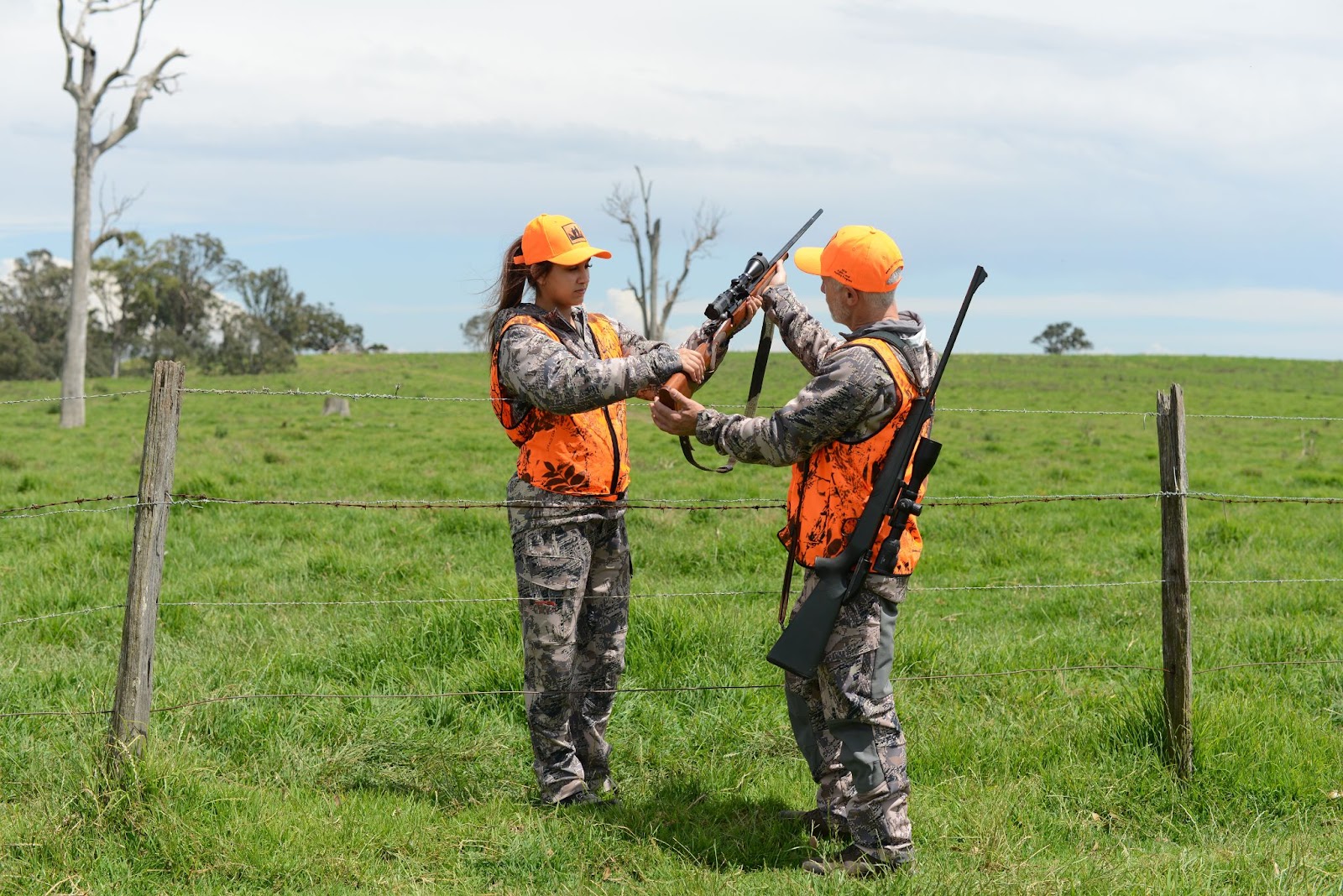
One way to properly move firearms over a fence. Photo Courtesy of Hunter Ed.
There are two major ways to reduce the fence crossing issue. The first one is to make it almost awkward in your level of caution. Allow one person to cross and then hand off the unloaded rifle without flagging anyone so that no one crosses with a rifle in their hands. If you are by yourself, you can lay the rifle on the ground next to the barbed wire so it can be picked up again after you cross. The second solution is my preferred solution. The Eberlestock backpack allows a scabbard close to your body for your rifle. This allows the heaviest item, most commonly your rifle, to be closest to your body. Now, the rifle is essentially in a holster. Without ever taking my rifle out of that holster, I can remove my backpack and put it on the other side of the fence, whether over the fence or through a hole in the fence. Now, I can cross with no backpack and no rifle.
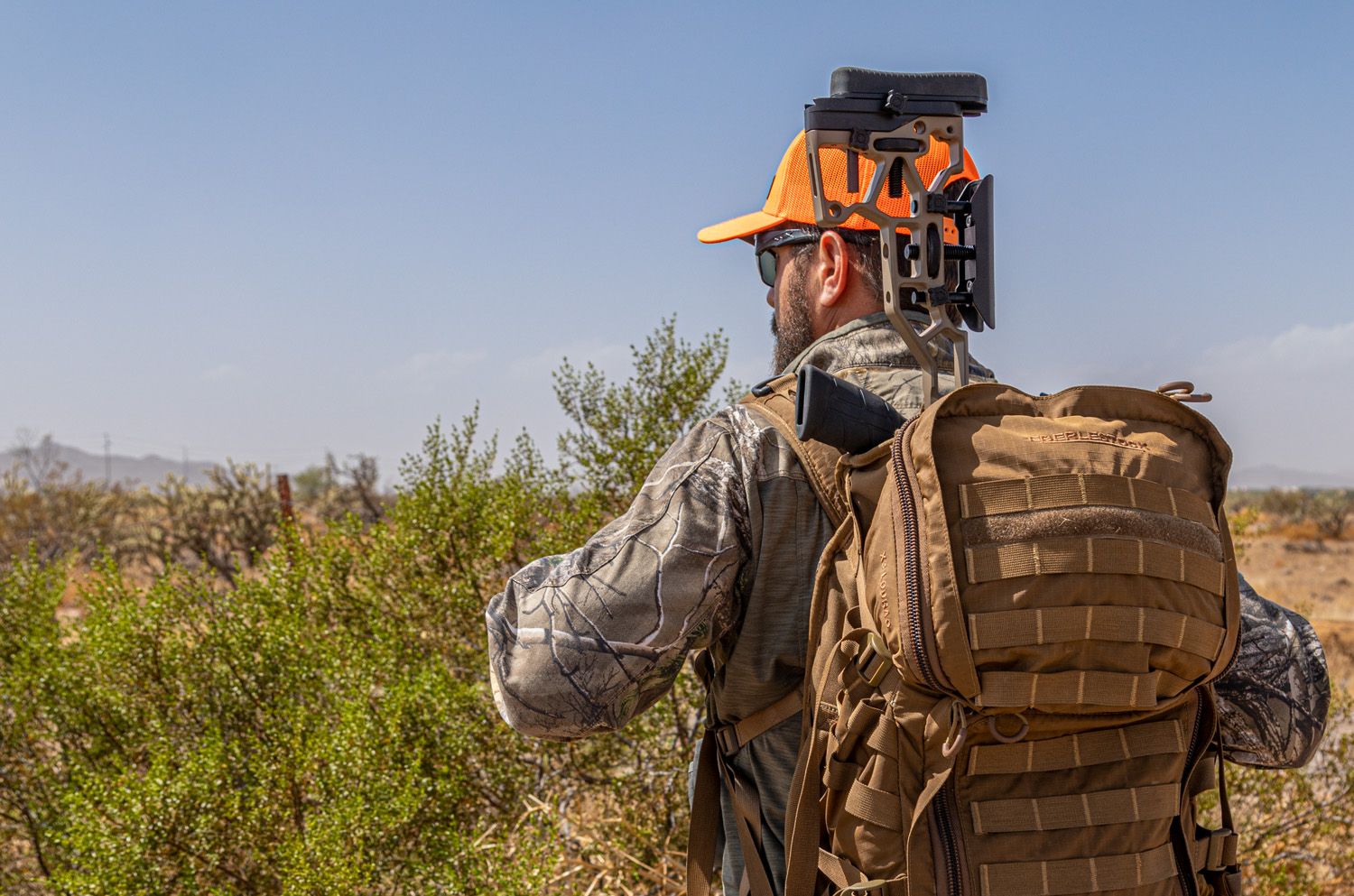
Eberlestock packs are a great way to carry your rifle.
POST HARVEST
The second most dangerous scenario is immediately after you drop your animal. Several things can occur after you see your animal drop that can cause problems. The first is to pick up your loaded rifle and quickly move toward the animal. This is problematic as you might catch the animal in its last moments, and it can be defensive. Additionally, you could be moving quickly and semi-carelessly with a loaded rifle. How do we mitigate this risk?
After we have successfully harvested our animal, give it time to expire. If you see it drop, be prepared to re engage, and don't hesitate to give it another round if necessary. Just because it fell down doesn't mean it won't get back up.Many experienced hunters don't mention that the animal will get back up as it might seem embarrassing, suggesting they placed a poor shot. Some animals are tough and need additional lead to stop them from ticking. This requires time and sometimes reanimation. The body recovers best in the prone position. Having been knocked down into its prone position, this animal may recover and get back up. Take your time moving. Be prepared to re engage. Once you feel the animal has expired, prioritize unloading your weapon before moving. Now, we've created a safe environment with a fully expired animal and an unloaded rifle that is now back in our backpack.
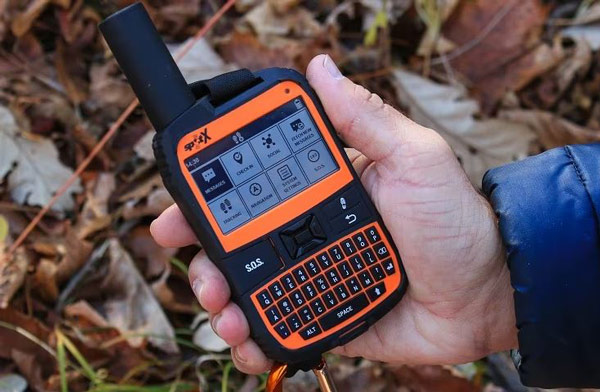
A satellite communications device is absolutely necessary in the backcountry, especially if hunting solo.
PROCESSING YOUR ANIMAL
The third most dangerous but most common place to get hurt while hunting is processing your harvest. We're often excited about our hunt and coming down from our adrenaline dump. This can create a tired, lethargic, and lazy state. We are also now holding edged weapons and working together with an animal that probably weighs a few hundred pounds. Maintaining good communication and safety with our edged weapons is paramount. It is very easy to have that blade slip during the processing of your animal. This can be uncomfortable at a minimum or even catastrophic. As often when hunting, we are a long way from help. This is where it's so important to avoid accidents through good communication and safe-edged weapon handling. This means we should all carry tourniquets and a light first aid kit and have a plan if things go wrong. More important than the first aid kit is the knowledge and how to use it.
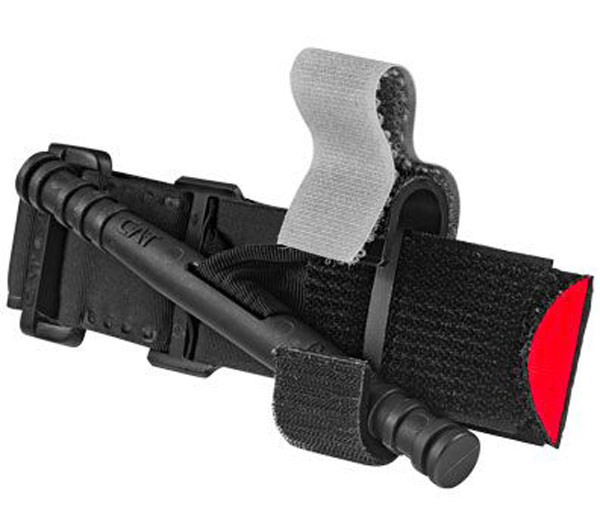
Carry a real CAT Tourniquet from North American Rescue. These tourniquets will not fail during use.
I hope this article sheds light on these problems for experienced hunters who have not had to deal with them. It should also educate new hunters to prevent them from having hard times or difficult experiences by educating them before the accident. Be deliberate, and stay safe.
Check out our guide for hunting in bad weather!
More articles from Rob Orgel of Emergency Response Tactical
- Long-Range Hunting and Shot Placement
- Eye Dominance and Handedness Maximizing Speed and Efficiency
- Are You Ready for Your Hunt?
- Combat Readiness Regaining Mental Balance
- Bullet Expansion for Rifle Hunting
ABOUT THE AUTHOR
Rob Orgel enlisted in the USMC in 2004 as an Infantry Rifleman (0311), serving with 3rd Bn 1st Marines in Iraq, including roles as a point man in OIF-3 & team leader in OIF-6. Later, he joined the 1st Marine Regiment, achieved the rank of Sergeant in 2010, & continued service in Afghanistan. Upon returning, he became a Combat Instructor at the School Of Infantry West. Transitioning to private military contracting with Securing Our Country (SOC), he instructed at the American Embassy in Iraq. In 2018, Rob became Chief Instructor at GPS Defense Sniper School, revamping their program. Now, as owner & lead instructor at Emergency Response Tactical, he focuses on training novice to advanced shooters on the range over 300 days a year.
MDT Renegade Ultra-Light Shooting Bag Wins On Target Magazine's Editor's Choice Award
#MDTSTORY - Bull Down, on the "P" Road!
Related Posts

5 Benefits of Suppressors Beyond Sound Reduction on Precision Rifles

Guns & Ammo: Savage 110 Ultralite Elite

Using a Sling in Modern Marksmanship

The Four Cornerstones of Marksmanship

Building a Classic Rifle with the MDT TIMBR CORE

Federal’s Peak Alloy Ammunition: Revolutionary Advancement or Reason for Caution?

Impact Shooting: MDT Field Stock in a Precision Rifle Match
